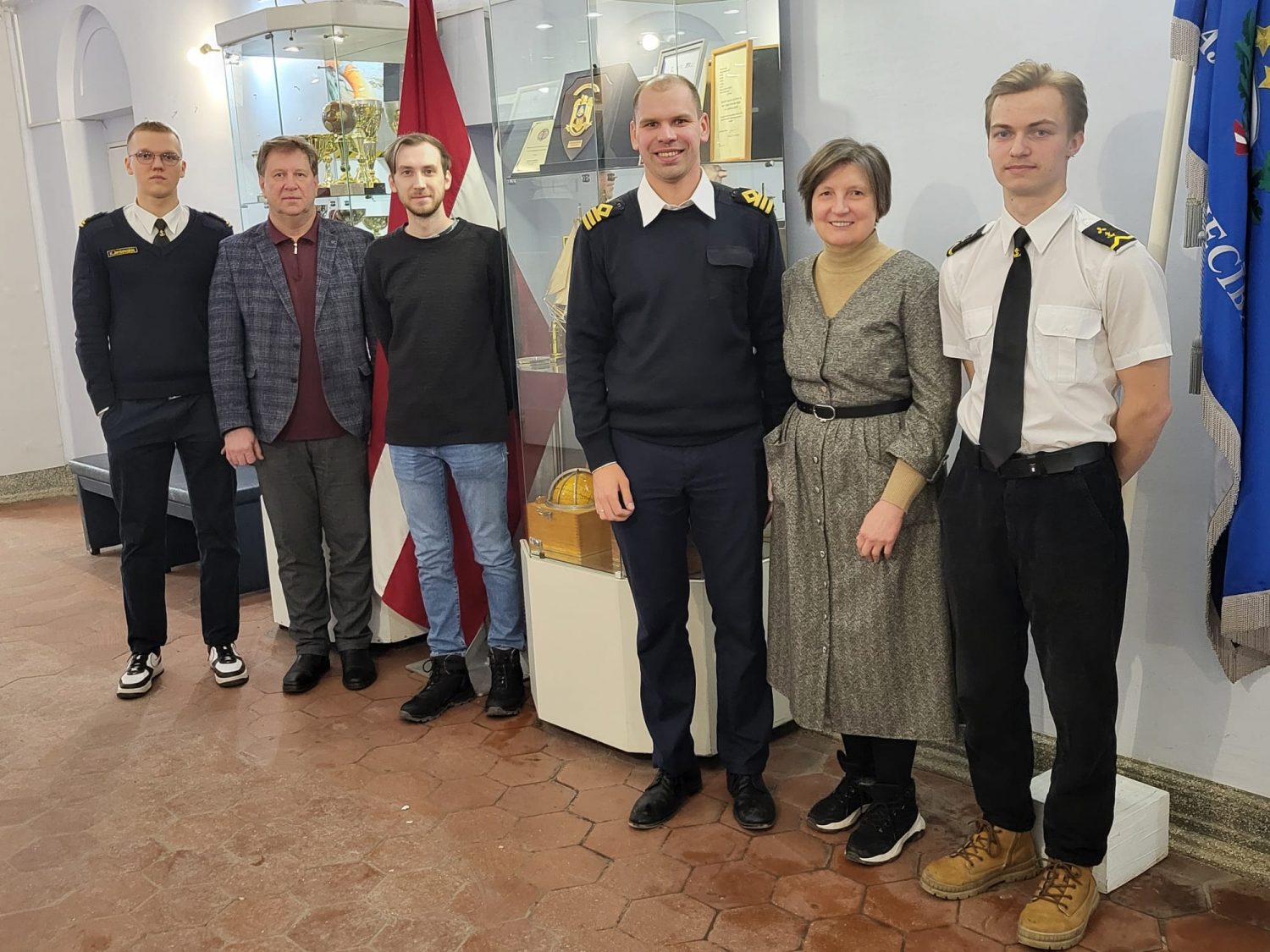
As we continue presenting the different teams competing in HydroContest by ENSM, we are pleased to introduce the RTU LJK & RTU Liepāja Team, participating in the Retrofit Challenge.
But what exactly is the Retrofit Challenge?
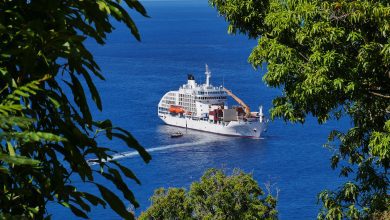
Unlike the traditional HydroContest categories, which focus on designing innovative new vessels, the Retrofit Challenge requires teams to work on an existing ship. The objective is to propose realistic, technically feasible, and economically viable modifications that improve the vessel’s energy efficiency and environmental performance, while respecting operational and structural constraints. The challenge reflects a crucial issue in today’s maritime industry: how to modernize and optimize the current fleet.
Introducing the Team
The RTU LJK & RTU Liepāja Team represents two Latvian institutions:
-
Riga Technical University Liepāja Maritime College (RTU LJK / RTU LMC)
-
Riga Technical University Liepāja Academy (RTU Liepāja)
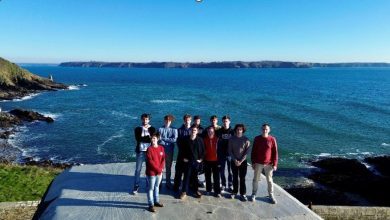
The team is composed of three mentors and four students, combining operational maritime expertise with engineering and mechatronics knowledge.
- Mentors
Lāsma Gustovska (Mg.sc.ing.)
Mentor of RTU LMC students, she is motivated by the opportunity to explore complex maritime challenges in depth while encouraging students to independently develop solutions. For her, the project is both a learning platform and a space for meaningful cooperation.
Nauris Upenieks – Ship Captain and Lecturer
As an active captain and maritime lecturer, he finds HydroContest particularly stimulating and challenging. His goal was not only to participate but also to inspire students to engage in a competition that bridges theory and real-world maritime practice.
Uldis Žaimis (Mg.sc.ing.)
Mentor of RTU Liepāja students, he has long been involved in innovative technological development. He values the opportunity to contribute to forward-thinking solutions and takes great satisfaction in seeing students grow while solving practical engineering problems.
- Students
Kārlis Janševskis – Maritime Transport student
Future Deck Officer (Operational Level), with prior sea experience onboard oil product tankers. He joined the challenge to broaden his perspective beyond navigation and operations, exploring ship transformation and design from a new angle.
Ralfs Bauermeisters – Marine Engineering student
Future Marine Engineer (Operational Level), with onboard experience on a refrigerated cargo vessel. He was motivated by the opportunity to deepen his knowledge of ship mechanics and energy efficiency.
Maksims Kotjuks – 4th year student in Smart Technologies and Mechatronics
With a diploma thesis related to maritime vessels, he viewed the competition as a valuable opportunity to gain practical experience in his field of study.
Gundars Bremanis – 3rd year Mechatronics student
Encouraged by his professor to join, he was eager to develop new technical skills and expand his knowledge through this demanding challenge.
Their Approach: A Collaborative Iterative Design Process
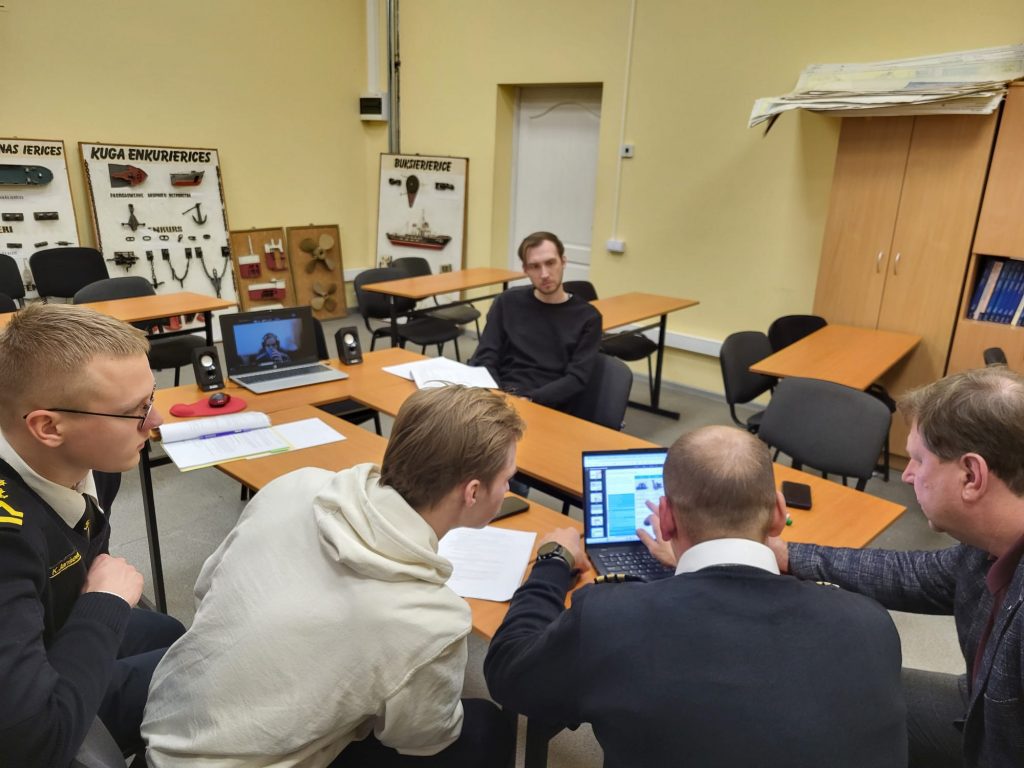
To address the Retrofit Challenge, the team adopted a Collaborative Iterative Design Process.
The project began with a detailed review of the vessel’s documentation and systems. Each member proposed ideas to improve efficiency and sustainability. These proposals were then discussed collectively, with some rejected due to technical or operational constraints, while others were refined and developed further.
The presence of an active seafarer in the team provided valuable real-world insight, ensuring that proposed improvements were practical and feasible under actual operating conditions.
Working on an existing vessel introduced significant complexity. Unlike a new-build project, retrofitting requires adapting innovations to structural, spatial, and economic limitations. For several students, this was a new field, making the learning process both demanding and rewarding.
Challenges and Lessons Learned
Yes, the team encountered difficulties.
Many members had limited prior experience in marine design, and much of the technical documentation was new to them. Some initial concepts had to be reconsidered after assessing feasibility from technical, economic, or operational perspectives.
However, these challenges became important learning opportunities. The team’s diversity — combining maritime operations, engineering, and innovation expertise — created a strong collaborative dynamic. Knowledge gaps were addressed collectively, and each difficulty helped refine the final proposal into a more realistic and effective solution.
A Human and Professional Experience
Beyond the technical dimension, HydroContest represents a genuine human adventure.
One of the most memorable aspects for the team was the atmosphere of collaboration between mentors and students. Discussions took place on equal footing, allowing everyone to contribute their expertise. This created a strong sense of mutual respect and shared enthusiasm.
There was also room for humor during intense calculations and budget discussions. At one point, when evaluating whether their proposal fit within the allocated budget, someone joked:
“ No problem — they can sell the vessel to buy the equipment.”
What Are Their Expectations from HydroContest?
Beyond the technical challenge, HydroContest represents a human experience based on exchange and mutual respect.
One of the most striking aspects for the team was the dynamic between mentors and students. Discussions took place on equal footing, with everyone contributing expertise. This atmosphere fostered a strong sense of appreciation and collective motivation.
There was even room for humor. During budget discussions, when evaluating whether their proposal fit within the allocated limits, someone jokingly suggested:
“ No problem — they can sell the vessel to buy the equipment.”
Ultimately, their main expectation is to develop the most realistic and effective solution possible. At the same time, the collaboration between two institutions has provided valuable interdisciplinary experience, which will undoubtedly support their future maritime and engineering careers.